Unlocking the Doors: How Artists Are Sidestepping Institutional Gatekeeping to Build Their Own Art World
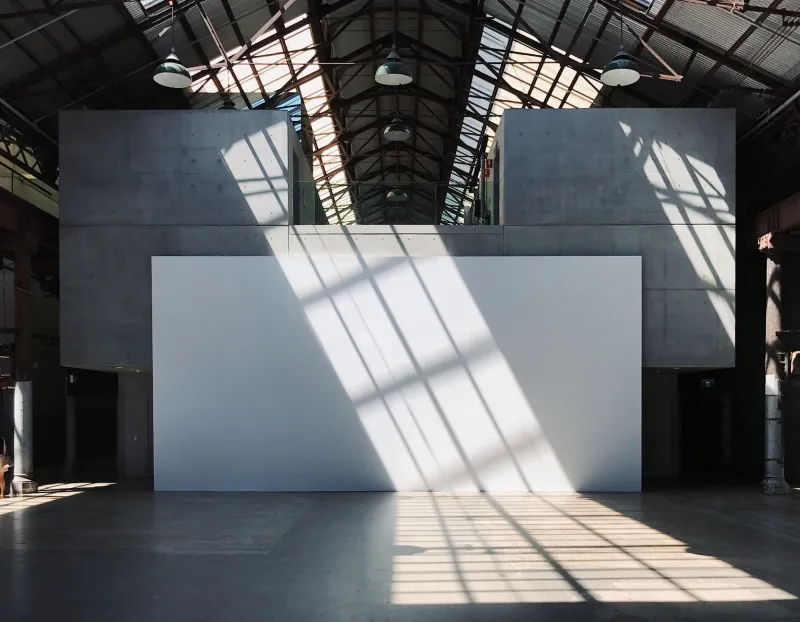
For decades, the American museum has occupied a peculiar dual role: celebrated as a democratic institution open to all, yet governed by acquisition committees, donor boards, and curatorial hierarchies that have historically favored a narrow canon of artists. For emerging creators — particularly those from communities underrepresented in the traditional art world — the path to a major institutional exhibition has been less a ladder and more a labyrinth. Today, a significant and accelerating countercurrent is reshaping that reality. Artists are not waiting for institutional doors to open. They are building their own.
The Weight of the White Cube
The traditional museum model, for all its cultural authority, carries structural contradictions that have grown increasingly difficult to ignore. Acquisition decisions at major institutions are often influenced by market valuations, donor relationships, and the reputations of established galleries — a feedback loop that systematically disadvantages artists who lack commercial representation or institutional pedigree. According to a 2023 report by the Association of Art Museum Directors, artists of color still represent a disproportionately small share of permanent collection holdings at leading U.S. museums, despite years of public commitments to diversification.
The curatorial pipeline presents its own set of obstacles. Many museum curators are recruited from a small constellation of graduate programs, reinforcing aesthetic and ideological continuities that can feel impenetrable to outsiders. "The institution doesn't just decide what art gets shown," observes one independent curator based in Chicago who has worked both within and outside the museum sector. "It decides what art gets legitimized, what gets priced, what gets remembered. And that decision-making process is rarely as transparent as people assume."
For artists navigating this landscape, the frustration is not merely personal. It is structural.
Concrete Alternatives: Spaces Born from Necessity
What makes the current moment distinctive is not simply the existence of artist-run spaces — those have appeared throughout American art history, from the loft exhibitions of 1970s SoHo to the co-op galleries of the East Village in the 1980s. What distinguishes this wave is its geographic breadth, its organizational sophistication, and its explicit critique of institutional power.
In Detroit, spaces like Playground Detroit and What Pipeline have spent years cultivating exhibition programs that prioritize artists working at the intersection of social practice, abstraction, and community engagement — artists who, as one of What Pipeline's co-founders has noted, "might wait fifteen years for a museum to catch up to what they're doing." These spaces do not position themselves as stepping stones to institutional recognition. They function as complete ecosystems, offering exhibition opportunities, artist residencies, and critical discourse on their own terms.
In Houston, the Project Row Houses initiative — now more than three decades old but continuously relevant — remains one of the most compelling models of what artist-led spatial practice can achieve. Founded by artist Rick Lowe in the city's historic Third Ward, the project transformed a row of shotgun houses into a platform for art, community development, and cultural memory. Its longevity and influence demonstrate that alternative exhibition models need not be provisional or precarious; they can become enduring civic institutions in their own right.
On the West Coast, Los Angeles continues to produce some of the most formally inventive alternative spaces in the country. Venues operating across neighborhoods from Boyle Heights to Leimert Park have created exhibition contexts that are deeply embedded in specific cultural communities — a deliberate counterpoint to the museum's tendency toward universalist abstraction.
The Economics of Independence
Building and sustaining an alternative exhibition space demands a particular kind of resourcefulness. Without the endowments that underwrite major museum operations, artist-run spaces typically operate on a combination of earned revenue, foundation grants, and the uncompensated labor of their founders. The financial precariousness is real, and it claims casualties — well-regarded spaces close every year, their archives and communities scattered.
Yet this economic constraint has also generated creative institutional forms. Many of the most vital alternative spaces have adopted hybrid models, combining gallery programming with artist residencies, educational workshops, publication projects, and event hosting. This diversification of function is not merely a survival strategy; it reflects a fundamentally different conception of what an exhibition space can be. Rather than a neutral container for finished objects, these venues present themselves as sites of ongoing production, conversation, and community formation.
Philanthropic support, too, has begun to shift in ways that favor this ecosystem. Several major foundations — including the Mellon Foundation and the Andy Warhol Foundation for the Visual Arts — have increased their grant-making to artist-run and community-based organizations in recent years, recognizing that these spaces often reach audiences and support artists that institutional funding has long overlooked.
Curators Reimagined
Perhaps the most consequential transformation occurring within this alternative ecosystem involves the role of the curator. In traditional museum contexts, curatorial authority tends to flow downward from institutional leadership, constrained by collection policies, donor sensitivities, and the museum's public identity. In artist-run spaces, the curatorial function is often distributed, collaborative, and explicitly politicized.
"We don't think of curation as a neutral act," explains one co-director of an artist-run space in Philadelphia that opened in 2021. "Every decision about whose work gets shown, how it gets contextualized, who gets invited into the space — those are political decisions. We'd rather be honest about that than pretend otherwise."
This transparency extends to relationships with artists. Many alternative spaces have moved away from the commission-based models common in commercial galleries, instead offering flat exhibition fees or revenue-sharing arrangements that prioritize artist compensation. The symbolic significance of this shift should not be underestimated: it reframes the artist not as a supplier of product but as a collaborator in a shared cultural project.
A Reckoning, Not a Replacement
It would be a misreading of this moment to frame the rise of alternative exhibition spaces as a straightforward rejection of museums. Many of the artists and curators building these new platforms maintain complex, sometimes ambivalent relationships with institutional spaces — exhibiting within them when the opportunity arises, advocating for their reform, and drawing on their resources where possible.
What is being rejected is not the institution per se but the assumption of its inevitability — the idea that the museum is the only legitimate arbiter of artistic value, the only meaningful destination for serious work. In building their own spaces, these artists are not simply creating alternatives to a broken system. They are proposing a different set of values: transparency over hierarchy, community over exclusivity, process over product.
For art enthusiasts and collectors paying attention to where the most vital creative energies are concentrated, these spaces deserve serious consideration. The artists showing in converted storefronts and repurposed industrial buildings today are not waiting for institutional permission. They have already moved on — and the art world is quietly reorganizing itself around them.