Beyond the Coasts: How Artist-Run Collectives Are Quietly Transforming America's Creative Landscape
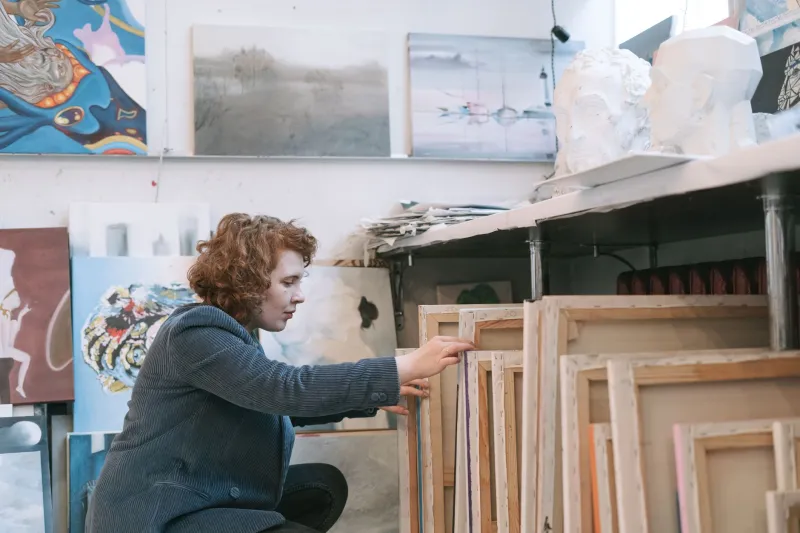
For decades, the American art world operated according to a familiar geography. New York set the prices. Los Angeles set the aesthetic. Everyone else, the story went, was waiting their turn. That narrative is now unraveling — not through a dramatic institutional revolt, but through the patient, collective labor of artists who decided, often out of necessity, to build their own infrastructure.
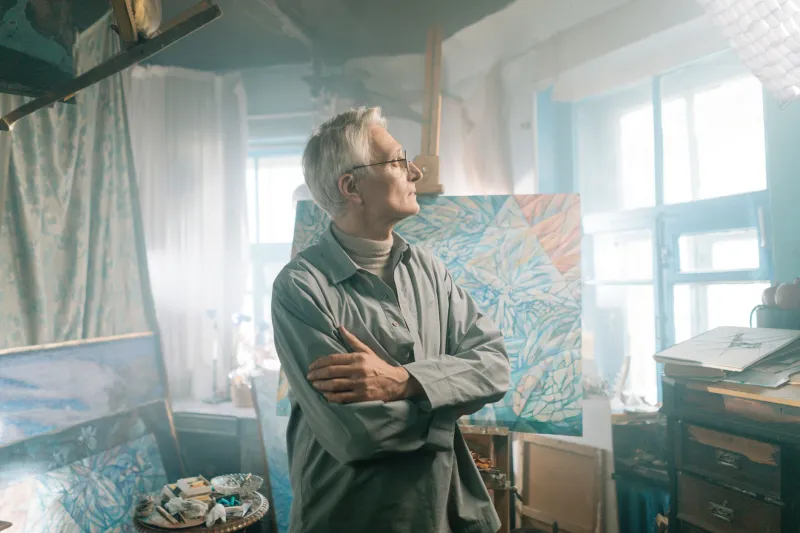
Across the country's interior, its mid-sized cities, its post-industrial corridors, and its university towns, a distributed network of artist-run spaces has taken root. These are not satellite galleries of Manhattan powerhouses. They are autonomous, often cooperatively structured, and increasingly consequential — both culturally and commercially.
The Architecture of Autonomy
The cooperative gallery model is not new. Artists have pooled resources to share exhibition costs since at least the mid-twentieth century. What distinguishes the current moment is the scale, the sophistication, and the deliberate rejection of the traditional art market's gatekeeping mechanisms.
In Cincinnati, collectives like the Visionaries and Voices studio network have created exhibition pipelines that move work from production to public view without a single commercial gallery intermediary. In Pittsburgh, the Silver Eye Center for Photography and adjacent artist-run projects have cultivated a photographic community that rivals the curatorial depth of far larger institutions. Detroit — long mythologized for its ruin, now increasingly recognized for its regeneration — hosts a constellation of artist-run spaces, from PLAYGROUND Detroit to the many studios clustered in the Corktown and Eastern Market neighborhoods, where the cost of operating remains low enough to sustain genuine experimentation.
These spaces share a structural logic: low overhead, shared governance, and a prioritization of the artist's voice over the curator's or collector's. What they produce, consequently, tends to feel less mediated — rawer in the best sense, more directly connected to the lived experience of the people making the work.
Collectors Are Noticing
For a long time, serious collectors treated regional scenes as minor leagues — places where emerging talent might originate before being discovered by a Chelsea or Silver Lake gallery and elevated into the real market. That condescension is eroding, and not merely out of enlightened principle. It is eroding because the work is good, and because savvy collectors have recognized that buying early — before the coastal imprimatur arrives — means acquiring significant work at prices that have not yet been inflated by institutional endorsement.
"The collectors who were buying in Detroit or Marfa or Asheville five years ago are not regretting those decisions," notes one independent art advisor who works with mid-career collectors across the Midwest and Southeast. "The question people are asking now is: where are those places today?"
The answer, increasingly, is: everywhere. Kansas City's 18th and Vine corridor has nurtured a community of painters and muralists whose work bridges street art and formal abstraction. New Orleans, always a cultural outlier, has seen its artist-run spaces — particularly those centered in the Bywater and St. Claude Avenue neighborhoods — attract a new generation of artists priced out of both Brooklyn and the French Quarter's tourist economy. Even smaller cities like Chattanooga, Tennessee, and Boise, Idaho, have developed cooperative gallery ecosystems that would have been unimaginable a decade ago.
The Pop-Up as Permanent Strategy
One of the most significant shifts in how these communities operate is the embrace of impermanence as a deliberate curatorial strategy rather than a concession to economic precarity. Pop-up exhibitions — once understood as a stopgap — have become a primary mode of presentation for many collectives, offering flexibility that traditional gallery leases cannot.
A collective operating out of Tucson, for instance, might mount a show in a borrowed commercial space one month, partner with a local brewery's back room the next, and take over a vacant storefront for a weekend installation the month after that. This mobility is not merely practical. It is also philosophically coherent with the work itself, which often interrogates notions of permanence, place, and belonging.
The pop-up model also democratizes access. By moving through different neighborhoods and non-traditional venues, these collectives reach audiences who would never enter a white-walled gallery — and who, in many cases, are exactly the communities whose experiences the art is attempting to address.
Institutional Recognition, Carefully Accepted
As regional collectives gain visibility, they are beginning to attract the attention of larger institutions — regional museums, university galleries, and even national platforms like the Smithsonian's traveling exhibition programs. This recognition is welcome, though not uncritically so. Many collective members are acutely aware of the ways in which institutional embrace can domesticate a practice that derives its power from its independence.
The most resilient collectives have developed explicit frameworks for engaging with institutions on their own terms — accepting exhibition opportunities while retaining curatorial control, partnering with museums for programming while declining to cede governance over membership or selection processes. It is a delicate negotiation, and not every collective navigates it successfully. Some dissolve under the pressure of growth. Others are absorbed into the institutional apparatus they once defined themselves against.
But those that maintain their structural integrity often emerge from institutional engagement stronger — with expanded audiences, deeper funding relationships, and a more clearly articulated sense of purpose.
Why This Matters for the Future of American Art
The rise of regional artist collectives is not simply a story about geography. It is a story about who gets to participate in the production and reception of contemporary art, and on what terms.
For too long, the costs of entry into the serious art world — both financial and social — have been prohibitive for artists without access to elite educational networks, urban real estate, or existing collector relationships. The collective model lowers those barriers without necessarily lowering the ambitions of the work being produced. It creates conditions in which artists can sustain a practice over time, build genuine communities of critical engagement, and develop bodies of work with the depth and coherence that serious collectors and institutions ultimately seek.
For those of us who believe that American art is most vital when it reflects the full breadth of American experience — not merely the experience of those concentrated in a handful of zip codes — this decentralization is not a consolation prize. It is the story worth following.
The gallery network nobody talks about is, increasingly, the one doing the most interesting work. Recent Arts will be watching closely.