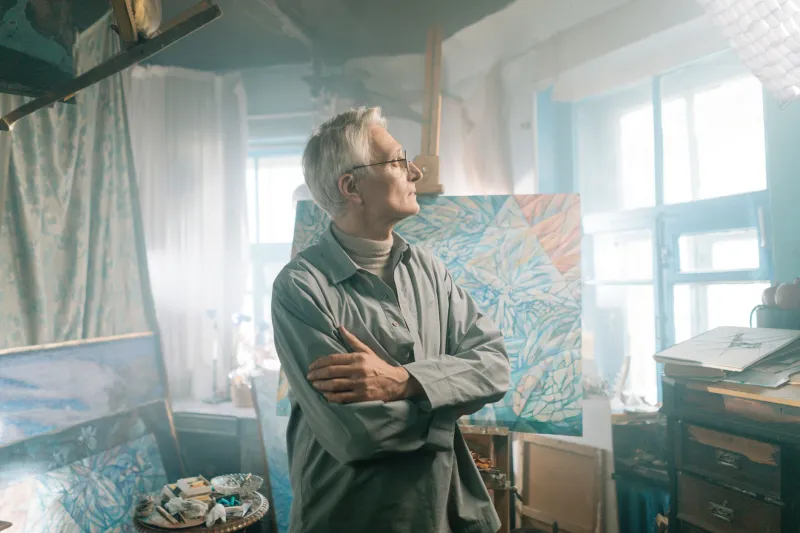
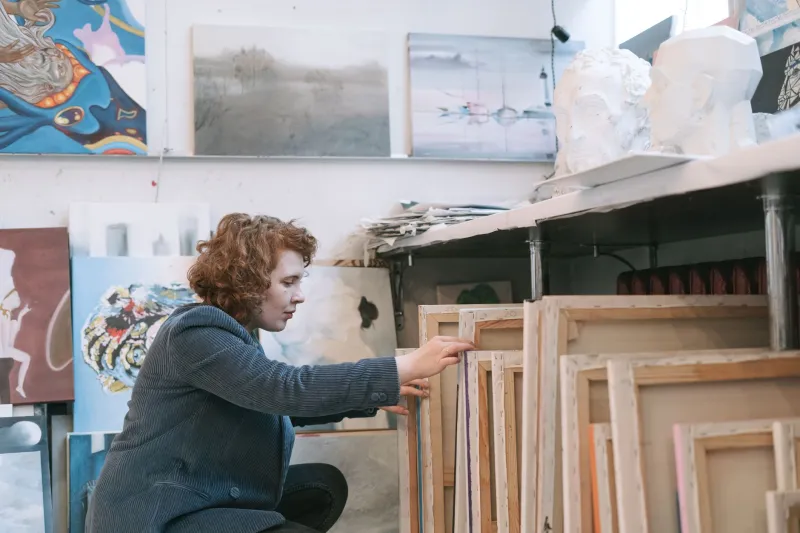
Quiet Studios, Louder Work: How Emerging Artists Are Abandoning the Feed to Reclaim Their Practice
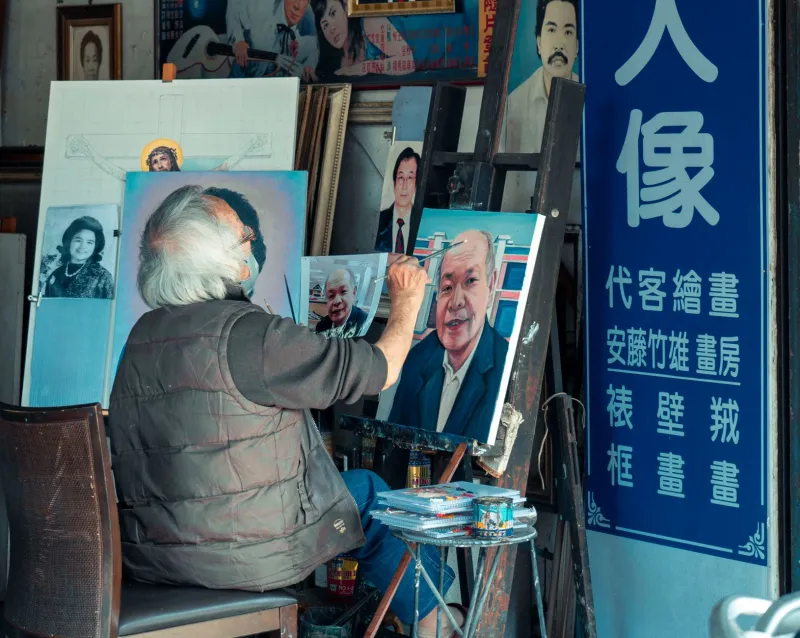
For a brief, heady moment, social media promised to democratize the art world. Any painter working out of a converted garage in Tulsa or a ceramicist operating from a shared studio in Providence could, theoretically, command the same audience as a blue-chip gallery artist in Chelsea. The platform was the great equalizer — or so the story went.
That promise, many emerging artists now argue, was always conditional. The terms were steep, the rent paid in attention, and the landlord was an algorithm that rewarded spectacle over substance. Today, a quietly growing movement of artists across the United States is choosing to stop paying altogether.
The Algorithm as Creative Antagonist
The critique of social media among working artists is not new, but its intensity has sharpened considerably over the past two years. What was once a vague discomfort — a nagging sense that the endless scroll was incompatible with the slow, often unglamorous work of making art — has hardened into a principled rejection for a meaningful cohort of emerging practitioners.
The core complaint is structural. Platforms like Instagram and TikTok are engineered to reward content that generates immediate engagement: bold color palettes that read well on a four-inch screen, time-lapse videos of paintings in progress, studio aesthetics that evoke aspiration rather than labor. The work that performs best online is frequently the work that has been optimized for the platform, not for the wall, the floor, or the viewer standing three feet away from a canvas.
"I realized I was making decisions in the studio based on what would look good in a post," says one Brooklyn-based painter who asked to remain anonymous, citing a desire to keep her retreat from the platforms as quiet as possible. "The composition, the scale, even the color — I was pre-visualizing everything through a phone screen. That's not painting. That's content creation with better materials."
Her experience is far from isolated. Conversations with artists, gallerists, and curators across major US art markets — New York, Los Angeles, Chicago, and the increasingly vital secondary markets of cities like Detroit, Houston, and Atlanta — reveal a consistent pattern: artists who built modest followings online are now deliberately dismantling or deprioritizing those presences in favor of what several describe simply as "going back to the studio."
What Analog Means Now
The term "analog" carries a certain romantic weight in contemporary discourse, and it is worth being precise about what this movement actually entails. For most of the artists involved, abandoning the feed does not mean retreating from the contemporary art world or embracing a nostalgic, pre-digital practice. It means, rather, redirecting the time and psychological energy consumed by platform maintenance toward the cultivation of slower, more durable professional relationships.
This typically involves a renewed focus on the gallery system — not the rarefied, inaccessible version of that system, but the network of independent and mid-tier galleries that form the connective tissue of regional and national art scenes. It means submitting to open calls, attending openings, building relationships with curators through studio visits, and allowing work to exist in physical space before it exists anywhere else.
For collectors, this shift has created an unexpected dynamic. Those who have long relied on Instagram as a discovery tool — and the platform genuinely did serve that function effectively for a period — are finding that some of the most compelling emerging work is no longer being surfaced algorithmically. It must be encountered in person, through gallery relationships, through word of mouth, through the kind of attentive looking that a platform designed to minimize dwell time actively discourages.
"There's a generation of collectors who are going to have to relearn how to find artists," observes one independent curator based in Los Angeles who works primarily with painters and sculptors under forty. "The artists who are stepping back from social media are, in a sense, raising the barrier to entry. You have to actually show up."
The Authenticity Question
Underlying this counter-trend is a deeper, more philosophically charged question about artistic authenticity in an oversaturated digital landscape. When the presentation of an artistic identity is inseparable from the mechanics of a platform — when the artist's "voice" is partly a product of caption writing, hashtag strategy, and posting frequency — something essential about the relationship between maker and work begins to erode.
This is not a new anxiety. Artists have always navigated the tension between market demands and creative integrity. But the speed and intimacy of social media have compressed that tension in ways that earlier commercial pressures did not. A gallery contract negotiated over months feels categorically different from the daily, granular performance of relevance that platform visibility requires.
Several artists interviewed for this piece described a pronounced shift in the quality of their attention after stepping back from regular posting. The studio, they reported, became quieter — not literally, but psychologically. Work that had been rushed to completion in time for a content cycle was allowed to develop at its own pace. Failures were no longer visible to an audience in real time, which meant they could be genuinely learned from rather than managed.
"I made the worst work of my life when I was most active online," says a sculptor based in Chicago who has not posted on any platform in over a year. "Not because the internet is evil, but because I was never fully in the studio. Part of me was always staging it."
Implications for Discovery and the Market
The practical consequences of this movement for the broader art market are still unfolding, but certain tendencies are already visible. Gallery directors who have embraced studio visits as a primary discovery mechanism report encountering work that feels markedly different from what circulates online — more formally ambitious, more willing to be difficult, less concerned with immediate legibility.
For collectors willing to engage with the gallery system directly, and to develop the kind of sustained relationships with dealers and curators that yield genuine access, this moment represents a genuine opportunity. The artists opting out of the algorithm are, by definition, less visible — but visibility and value are not synonymous, and the art market has always rewarded those who understood the difference.
What this movement ultimately signals is something more significant than a lifestyle choice or a professional strategy. It is a reassertion, made quietly and through the simple act of returning to work, that art is not content — that the studio is not a set, and that the most enduring creative practices are built on conditions that no platform can replicate: time, solitude, and the sustained attention of a single human mind in a room with materials.
The algorithm will continue to evolve. The studios, for those who choose to inhabit them fully, will remain.