Open Studio, Open Door: How Artists Are Turning Their Creative Spaces Into Cultural Destinations
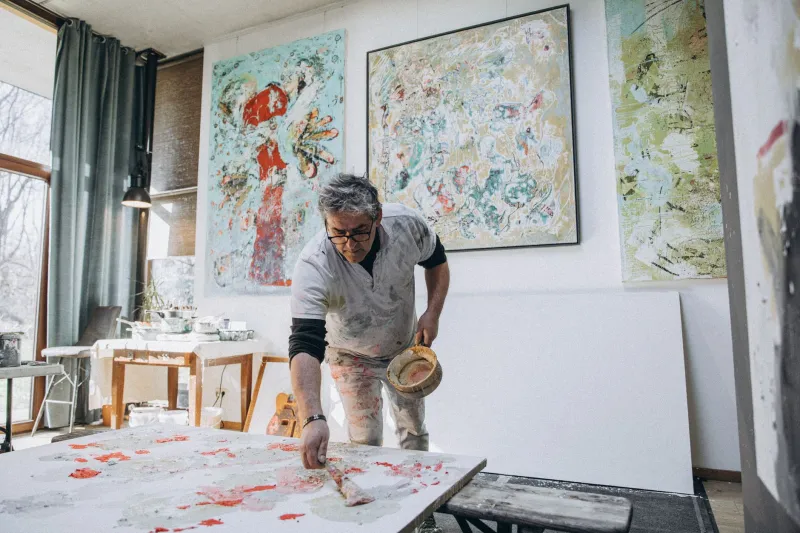
For generations, the studio visit occupied a rarified position in the art world's social architecture. A gallerist might arrange one after months of correspondence. A serious collector might earn the privilege through sustained patronage. For everyone else, the artist's workspace remained a mythologized interior—glimpsed only in documentary footage or carefully staged magazine spreads. That mythology, however, is dissolving with remarkable speed.
Across the United States, a growing cohort of emerging artists is dismantling the exclusivity that has long governed access to their creative environments. In its place, they are constructing something altogether different: a studio visit economy premised on transparency, direct engagement, and the recognition that the creative process itself holds genuine cultural and commercial value.
From Private Ritual to Public Experience
The traditional studio visit served a transactional purpose cloaked in the language of intimacy. Collectors came to assess. Curators came to scout. The artist performed a kind of guided revelation, carefully curating which works were visible, which conversations were had, which vulnerabilities were permitted. The studio, in this context, functioned less as a workspace and more as a showroom with better lighting and a more compelling backstory.
What is emerging now operates on an entirely different register. Artists in cities like Chicago, Detroit, Philadelphia, and Los Angeles are scheduling open studio hours the way independent bookshops schedule readings—regularly, accessibly, and with the explicit intention of building community rather than closing deals. Some charge modest entry fees ranging from fifteen to fifty dollars. Others offer tiered memberships that grant recurring access alongside perks like early purchase windows or invitation to works-in-progress critiques.
The shift reflects something deeper than a pricing model. It signals a reconceptualization of what a studio visit is actually for.
Virtual Access and the Geography of Inclusion
If in-person studio visits are expanding the geographic reach of cultural participation within cities, virtual studio experiences are doing something more ambitious still: collapsing distance entirely.
Platforms including Patreon, Substack, and purpose-built tools like Artwork Archive have become infrastructure for artists offering digital studio access. A painter based in Albuquerque might host a monthly live-streamed studio session for two hundred subscribers. A ceramicist in rural Vermont might offer an asynchronous video series documenting the full arc of a single piece, from raw clay to finished glaze. These formats attract audiences who would never have encountered the work through conventional gallery channels—and who, notably, are often willing to pay for the experience of witnessing process rather than simply acquiring product.
The economics here deserve attention. An artist with five hundred Patreon supporters paying ten dollars monthly generates five thousand dollars in recurring revenue before a single work sells. That figure represents meaningful financial stability for an emerging artist navigating the precarious early years of a creative career. More significantly, it arrives without the commission structures, contractual obligations, or aesthetic compromises that gallery representation sometimes demands.
Rewriting the Collector Relationship
Perhaps the most consequential dimension of the studio visit economy is its effect on how collectors and artists relate to one another. The gallery model, for all its virtues, introduced a layer of mediation that could flatten the relational texture of art acquisition. Collectors bought work from dealers; artists received checks. The human connection that gives collected art its deepest meaning—the story of how a piece came to exist, the person who made it, the world they inhabit—was often compressed into a brief wall label or a perfunctory artist statement.
Direct studio access restores that texture. Collectors who visit an artist's workspace, whether physically or virtually, develop an understanding of the work that no gallery presentation can fully replicate. They see the false starts pinned to the wall. They understand why a particular color recurs. They learn that the large canvas in the corner has been repainted four times. This knowledge transforms the act of collecting from transaction into relationship, and relationships, as any experienced collector will confirm, tend to be both more durable and more financially committed than transactional ones.
Several artists interviewed for this piece described collectors who first encountered their work through a virtual studio tour, returned for an in-person visit, and subsequently became long-term supporters—purchasing multiple works over several years and referring peers into the artist's orbit. The studio visit, in these accounts, functions as both introduction and ongoing cultivation.
Pricing Access Without Devaluing It
The question of how to price studio access is one that emerging artists navigate with considerable care. Set the barrier too low, and the experience risks feeling disposable. Set it too high, and the democratizing promise of the model collapses back into exclusivity. The most thoughtful practitioners tend toward tiered structures that preserve accessibility at the entry level while reserving more intimate engagement for those willing to invest more substantially.
A Brooklyn-based textile artist, for example, might offer a free monthly newsletter with studio photography and process notes, a twenty-five dollar quarterly virtual tour with live Q&A, and a two-hundred dollar annual membership that includes two in-person visits and first access to new work. Each tier delivers genuine value; none of them requires a collector's budget to participate. The model treats curiosity as a legitimate entry point rather than an obstacle to be filtered out.
This kind of structural thinking reflects a broader maturation in how emerging artists approach the business of their practice. The romanticized notion of the artist indifferent to commerce is giving way to something more pragmatic and, ultimately, more sustainable: the artist as a thoughtful steward of their own creative economy.
A New Kind of Cultural Institution
Zooming out, the studio visit economy represents a form of cultural institution-building happening entirely outside traditional frameworks. No board of directors. No endowment. No curatorial hierarchy determining whose work merits public attention. Just artists, their spaces, and the audiences willing to pay for the privilege of proximity.
This is not without its complications. Artists must absorb the administrative and promotional labor that institutions typically handle. The burden of marketing, scheduling, and managing visitor relationships falls entirely on the creator. For some, this overhead is energizing; for others, it represents a genuine drain on the creative time the studio visit is ostensibly meant to celebrate.
But the complications do not diminish the significance of what is being constructed. In a cultural moment when trust in traditional institutions is eroding and audiences are increasingly drawn to direct, unmediated experiences, the artist's studio offers something genuinely rare: authentic access to the place where ideas become objects, and objects become meaning.
The door, it turns out, was never locked. It simply needed someone willing to open it.