From Discovery to Institution: How Collectors Reckon With the Artists They Helped Launch
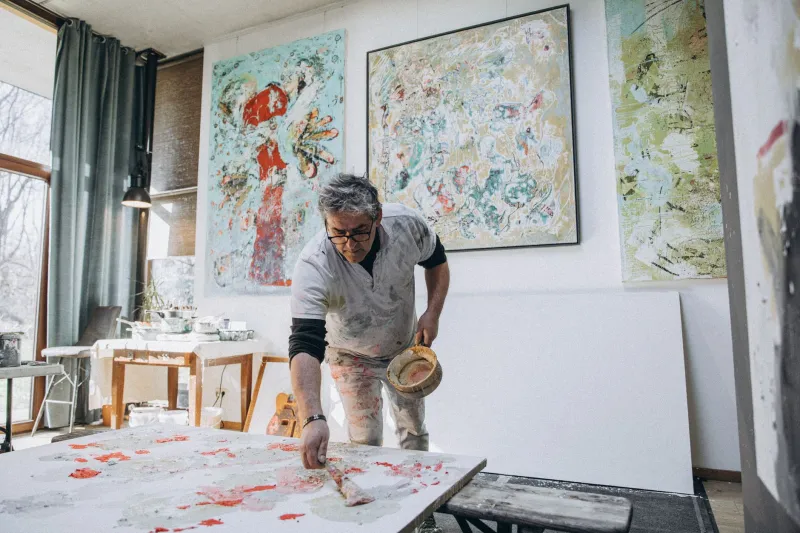
There is a particular kind of satisfaction that comes from acquiring a work before the rest of the world catches on. For collectors who operate at the edges of the emerging art scene — attending open studios in converted warehouses, following artists on platforms that haven't yet become marketing channels, purchasing directly from painters who still have day jobs — that satisfaction is deeply personal. It is the feeling of genuine discovery, of having trusted your own eye before any institution told you what to see.
Then the museum calls. The gallery announces a major solo show. The auction house places a secondary market estimate that bears no resemblance to what you paid three years ago. And suddenly, the intimate relationship you believed you had with an artist's practice becomes something far more complicated.
This is the inflection point that more collectors are confronting as the pace of institutional recognition accelerates. In an era when social media virality, art fair visibility, and curatorial ambition can propel an emerging artist into mainstream consciousness within a matter of months, the emotional and ethical terrain that early supporters must navigate has grown considerably more complex.
The Intimacy of Early Support
Collectors who engage with artists before institutional validation often describe the experience in relational terms rather than transactional ones. They attend studio visits. They follow the evolution of a body of work across years. They sometimes provide the kind of quiet financial stability — through purchases, commissions, or even informal patronage — that allows an artist to take risks that a more commercially cautious practice might foreclose.
That proximity creates a sense of shared investment that goes beyond the physical object hanging on a wall. When an artist whose early experiments you supported begins appearing in museum surveys and receiving grants from major foundations, the pride is genuine. But so is a subtler, less comfortable feeling: the sense that something irreplaceable has shifted in the relationship.
"There's a grief that collectors don't talk about openly," says one New York-based collector who has supported several artists now represented by blue-chip galleries. "It's not jealousy — you want the artist to succeed. But the version of their practice that drew you in, that rawness, that sense of working something out in real time — that changes when the institutional machinery gets involved. It has to."
Questions of Valuation and Authenticity
The financial dimension of an artist's mainstream ascent is perhaps the most legible part of the dilemma, but it is rarely the most significant for serious collectors. When early acquisitions appreciate dramatically, the practical questions multiply quickly. Do you hold? Do you sell into a heated secondary market and reinvest in the next wave of emerging work? Do you donate to a museum and secure both a tax benefit and a form of institutional legitimacy for your collection?
Each choice carries weight beyond the purely financial. Selling an early work on the secondary market at a substantial profit can feel like a betrayal of the relationship that made the acquisition meaningful in the first place — even if the artist themselves has moved on entirely. Holding the work, meanwhile, can feel like an act of faith or an act of nostalgia, depending on the day.
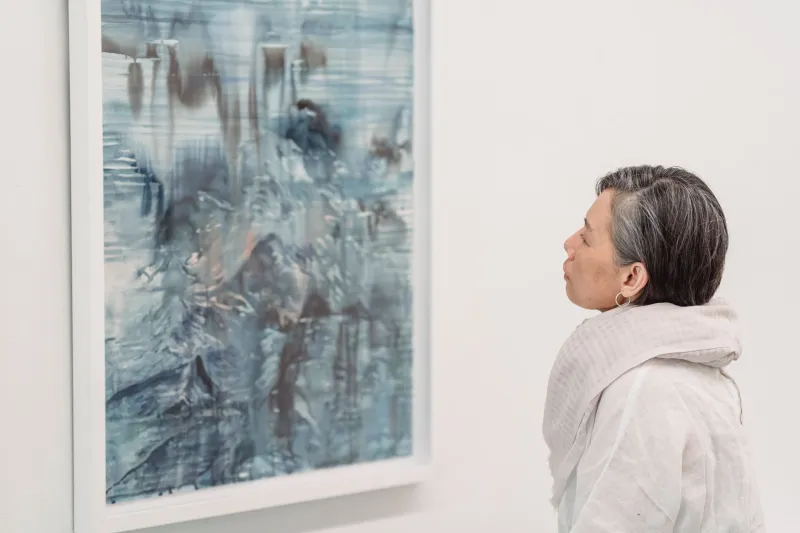
Authenticity presents its own set of complications. Collectors who prized an artist's work precisely because it existed outside the commercial mainstream may find that institutional recognition, however deserved, alters their experience of the objects themselves. The painting that once felt like a private conversation now carries the weight of critical consensus, art historical positioning, and market expectation. It is the same object. It is not the same experience.
The Artist's Perspective
Artists who have navigated this transition speak candidly about the complexity of their relationships with early collectors — with gratitude that is genuine and complicated in equal measure.
"The people who bought my work when no one else was paying attention gave me something I can never fully repay," says one painter based in Chicago whose work entered the collection of a major American museum last year. "But I also can't be responsible for managing their feelings about what my career has become. My job is to keep pushing the work forward. If the work they loved was honest at the time, it's still honest. That doesn't change because a curator wrote about it."
This tension — between an artist's obligation to their own creative evolution and the expectations of those who supported earlier phases of their practice — is one that gallerists frequently find themselves mediating. When a gallery takes on an artist who previously sold work independently or through smaller venues, the recalibration of relationships with existing collectors becomes a delicate logistical and emotional exercise.
"We spend a lot of time talking to early collectors when we bring on an artist who already has a community around them," explains a gallerist based in Los Angeles whose program has launched several artists into institutional prominence. "Those collectors deserve transparency about what the transition means for pricing, availability, and access. They earned that conversation."
Rethinking the Collector's Role
The most generative response to this dilemma may be a fundamental reorientation of how collectors understand their own function within the art ecosystem. If the goal is genuine support for artistic practice rather than the accumulation of objects whose value is validated by others, then an artist's mainstream success is not a rupture in the relationship — it is its most complete expression.
This reframing requires a degree of ego dissolution that is genuinely difficult. The pleasure of discovery is real, and there is nothing wrong with acknowledging it. But the collector who mistakes that pleasure for ownership — of an artist's trajectory, of a particular phase of their development, of the cultural meaning attached to their work — is likely to find the inflection point not just disorienting but genuinely painful.
The collectors who seem to navigate this transition most gracefully are those who treat early support as a form of stewardship rather than investment, in the fullest sense of both words. They take pride in having created conditions that allowed an artist to develop. They hold their acquisitions with open hands. And when the institutional world finally catches up to what they saw years earlier, they feel something closer to vindication than loss.
A Permanent Tension
There is no resolution to the collector's dilemma that fully satisfies. The art world runs on discovery, and discovery is inherently temporary. The emerging artist who captured your imagination before anyone else was paying attention will, if the work is genuinely strong, eventually attract the attention that the work deserves. The intimacy of that early relationship cannot survive that transition unchanged.
What can survive — and what the most thoughtful collectors work to preserve — is a commitment to the underlying impulse: the willingness to look carefully, to trust your own perception, and to support creative work before the consensus tells you it is safe to do so. That impulse does not require an artist to remain undiscovered forever. It only requires that you keep looking for the next one.
In that sense, the inflection point is not an ending. It is, for the collector with the right disposition, an invitation to begin again.