The Degree Debate: Rethinking the MFA in an Age of Self-Taught Success
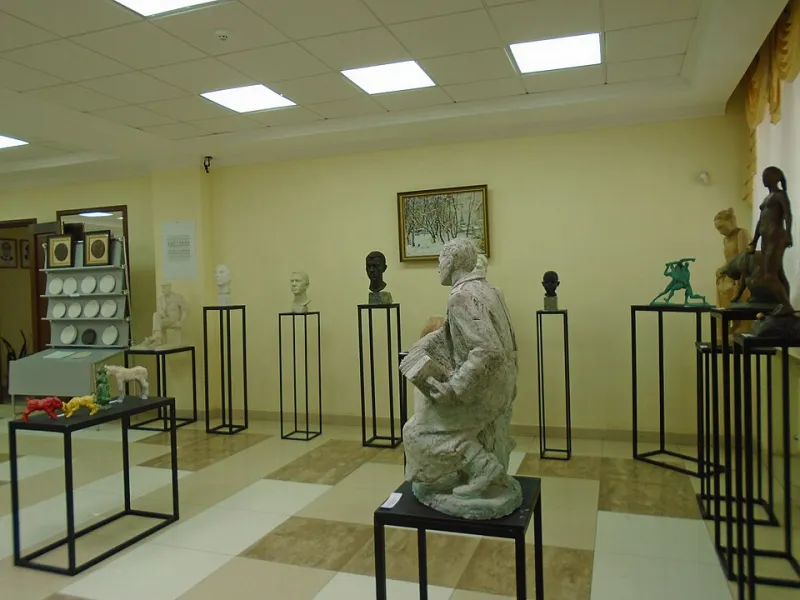
Photo: Vyacheslav Kirillin, CC BY-SA 4.0, via Wikimedia Commons
For most of the last half-century, the path to a serious contemporary art career ran through an MFA program. The degree functioned less as education than as admission ticket — the credential that galleries recognized, the network that collectors trusted, the studio time that practice demanded.
In 2025, that consensus is fracturing. Graduate tuition at top private programs now routinely exceeds $100,000 once living costs are counted. Meanwhile, a generation of self-taught artists has built careers on platforms that never ask for a transcript. The question is no longer whether the MFA is valuable. It's whether it's valuable at this price — and for whom.
What the Degree Still Buys
Defenders of the MFA are not wrong about what programs offer. Ask graduates what changed their trajectory and they rarely mention coursework. They mention people: the visiting critic who later introduced them to a gallery, the cohort that became a decades-long peer group, the professor who made a phone call no cold email ever could.
One painter who completed her MFA on the East Coast describes the degree as "the most expensive networking event in history — and completely worth it." Her program delivered something difficult to replicate: sustained, rigorous critique from people with no personal stake in flattering her, plus two years of protected time that the market rarely grants.
There is also the question of access. For artists without family wealth or urban connections, an MFA — particularly at a well-funded public program with full funding packages — remains one of the few structured routes into professional art worlds that otherwise run on inherited relationships.
The Debt Problem
But the math has grown indefensible for many. A six-figure debt load, serviced on the income of an emerging artist, shapes every decision that follows. Artists report turning down residencies, declining ambitious projects, and taking commercial work they don't believe in — all in service of loans.
The cruelest irony is that the degree meant to enable a career can quietly constrain it. An artist making work that critiques capitalism while paying $900 a month in student loans is not a paradox; it's a common condition, and it bends practice toward the market in ways no one likes to say out loud.
The Alternatives Getting Serious
What's changed is the credibility of the alternatives. Apprentice-style studio programs — where emerging artists work alongside established ones, trading labor for mentorship — have proliferated, particularly in fabrication-heavy disciplines. Free and low-cost online academies now offer structured curricula, critique communities, and even visiting-artist lectures that rival program offerings.
Artist-run schools and sliding-scale workshops in cities like Los Angeles, Chicago, and Philadelphia have built reputations on rigor rather than accreditation. And social media, whatever its distortions, has collapsed the gatekeeping function the degree once performed: a collector can now discover an artist without ever learning where they studied.
A self-taught ceramicist in North Carolina puts the case plainly: "I learned from other potters, from YouTube, from ten thousand failed kilns. I have no debt. I have no network either — that's the real cost. But I'd rather build a network slowly than dig out of a hole for twenty years."
The Honest Answer
Here is the uncomfortable synthesis: the MFA is neither dead nor essential. It remains the fastest route to certain doors — academic teaching, blue-chip gallery representation, funded residencies with prestige attached. For artists who can attend with meaningful funding, it is often still worth it.
For everyone else, the calculus has genuinely shifted. The degree's core benefits — critique, community, time, connection — can now be assembled through other means, at other prices. What cannot be replaced by any pathway is the discipline itself: the willingness to make work seriously, over years, without guaranteed reward.
The art world's dirty secret has always been that credentials matter less than the work, provided the work finds its people. The MFA was one way of getting there. It is no longer the only way — and the artists saying no to six figures of debt are not rejecting rigor. They're rejecting a price tag that no longer matches the product.