Rooted on Purpose: The Emerging Artists Turning Local Identity Into a Radical Artistic Statement
There is a particular irony embedded in the contemporary art market's relationship to place. The same institutional circuit that celebrates geographic diversity in its programming—that flies artists from Appalachia to Art Basel, from the Mississippi Delta to the Venice Biennale—tends to reward work that travels well, which is to say work that has been, consciously or not, translated into a visual language legible to audiences with no knowledge of its origins.
A growing cohort of emerging artists is refusing that translation. Not out of provincialism or indifference to broader audiences, but out of a deliberate conviction that specificity is itself a form of integrity—and that the homogenizing pressures of the global art market represent exactly the kind of cultural force worth resisting.
The Homogenization Problem
Anyone who has spent time moving through major art fairs over the past decade has likely encountered a particular aesthetic phenomenon: work from radically different geographic and cultural contexts that nonetheless feels, in some difficult-to-articulate way, like it could have been made anywhere. The influences are global, the materials often generic, the conceptual frameworks shaped by the same graduate programs and theoretical texts.
This convergence is not accidental. It reflects the rational responses of artists who have learned, through experience or observation, what kinds of work receive institutional attention, gallery representation, and collector interest. The market, however unintentionally, functions as a filter—and what it filters out, with remarkable consistency, is the kind of deep local knowledge that doesn't compress into an artist's statement.
"There's a version of regional identity that the art world is comfortable with," observes one independent curator who has organized several exhibitions focused on artists from the American South. "It's picturesque. It's legible. It doesn't make anyone uncomfortable. What I find more interesting—and more threatening to the system—is work that assumes local knowledge. Work that isn't trying to explain itself to an outsider."
Coal Country Reclaimed
In the mountains of eastern Kentucky and southwestern Virginia, a loose network of artists—some born in the region, others drawn to it—is producing work that engages directly with the visual and material culture of coal country: not as elegy, and not as political statement in any simple sense, but as genuine inquiry into a landscape that has been simultaneously exploited, romanticized, and ignored by the cultural mainstream.
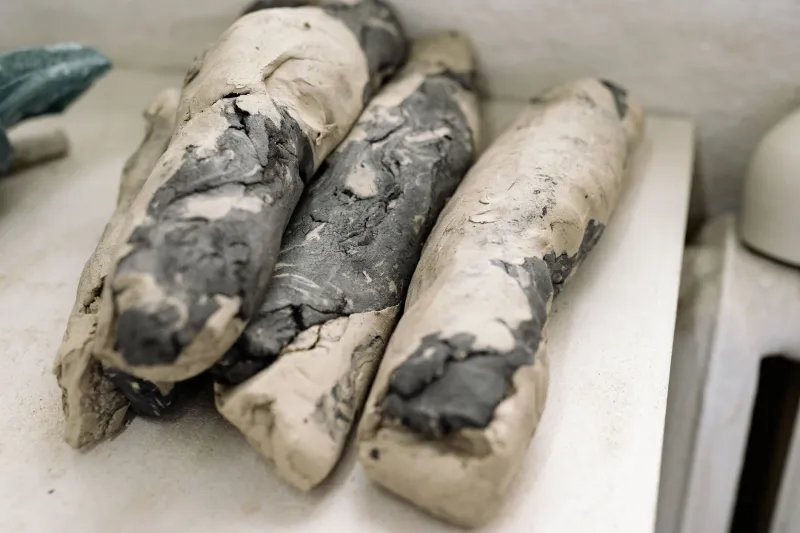
Sarah Beth Combs, a ceramicist and installation artist raised in Harlan County, Kentucky, works with local clays and surface treatments derived from the region's industrial history. Her recent installations have incorporated coal dust, mining maps, and the particular gray-green palette of the Cumberland Plateau in ways that resist easy categorization as either documentation or critique.
"I'm not making work about coal country for people who've never been here," she says, speaking from her studio in a converted building that once housed mining equipment. "I'm making work that comes from this place, that assumes this place. If someone from New York finds a way into it, I'm glad. But their understanding isn't the point of entry."
This insistence on the local audience as the primary interlocutor—rather than the cosmopolitan art world—represents a meaningful departure from the career logic that typically governs emerging artist development.
Indigenous Artists and Place-Based Storytelling
For Indigenous artists working within and alongside the mainstream contemporary art world, the question of geographic and cultural specificity carries additional weight. The tension between institutional legibility and community accountability has shaped Indigenous art practices for generations, and the current moment—marked by increased institutional interest in Indigenous work—has made that tension more acute, not less.
Nez Perce artist and photographer Elias Runningwater, based between Portland and the Nez Perce reservation in Idaho, describes his practice as fundamentally place-based in ways that complicate the art world's appetite for his work.
"There's a version of what I do that institutions want," he says. "Landscape photography that references Indigenous presence in ways that are moving but not disruptive. That's not what I'm making. I'm making work that is specific to a legal, political, and spiritual relationship to a particular geography. That specificity is not decorative."
Runningwater's recent series, which pairs contemporary photographs with treaty language and oral history transcriptions, has been shown at tribal cultural centers and university galleries but has found more complicated reception at commercial venues—a dynamic he regards as informative rather than frustrating.
Regional Vernacular as Visual Language
Beyond the specific contexts of Appalachian and Indigenous practices, the broader turn toward regional specificity is visible across a wide range of media and geographies. Painters in the Rio Grande Valley are working with the particular quality of light and the layered cultural histories of the US-Mexico borderlands. Textile artists in the Gullah Geechee corridor of coastal South Carolina and Georgia are drawing on traditions of indigo cultivation and sweetgrass basketry that connect contemporary practice to centuries of African American cultural continuity. Photographers in the Great Plains are producing work that takes seriously the visual grammar of a landscape that mainstream culture has consistently underestimated.
What these practices share is not a style but an orientation: a willingness to be accountable to a specific place and its specific histories, even when that accountability limits commercial portability.
Why This Moment
The timing of this regional turn is not coincidental. It is, in part, a response to the particular anxieties of the current cultural moment—the flattening effects of social media, the homogenizing pressure of algorithmic visibility, the sense that global connectivity has produced not diversity but a new kind of sameness.
In that context, deep local knowledge—the kind that takes years to acquire and cannot be approximated by a brief artist residency—functions as something the art market struggles to commodify. It is, in the most literal sense, irreplaceable. And for artists who have grown skeptical of the art world's appetite for novelty without depth, that irreplaceability is precisely the point.
"The art world will eventually find a way to package this," acknowledges Combs. "It always does. But the work that comes from genuinely knowing a place—that knowledge doesn't disappear just because someone puts a price tag on the outcome. It's in the material. It's in the decisions. It stays."
For Recent Arts, the emergence of this regional insistence represents one of the more genuinely exciting developments in contemporary American art: a refusal, quiet but firm, to be understood on anyone else's terms.